
Visitors Who Leave And Never Return
Around 95–98% of visitors don't buy on their first visit — and most aren't uninterested. They're researching, busy, or simply not ready yet. Without a way to bring them back, the revenue you already paid to attract quietly walks out the door.
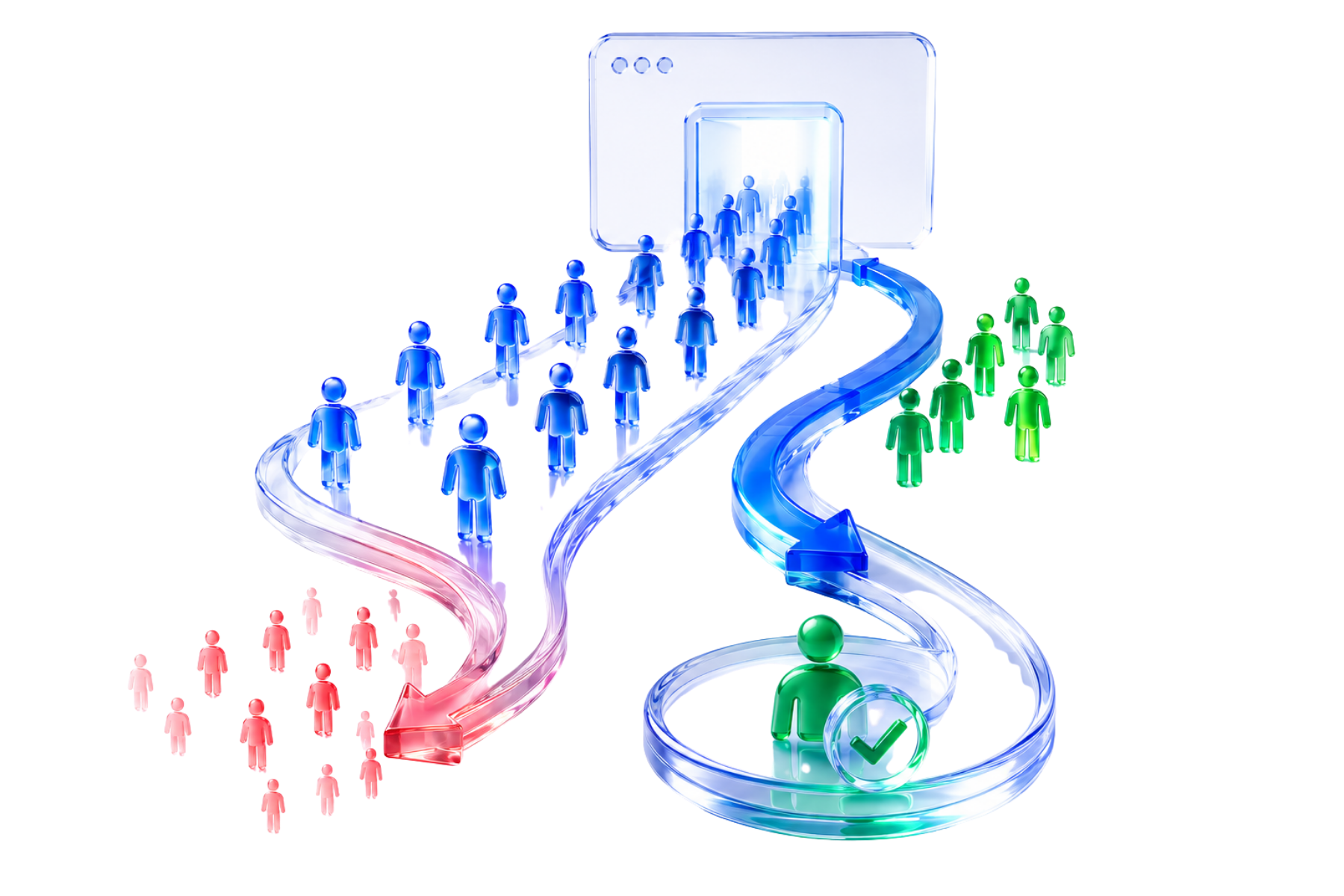
The Revenue Leak Most Businesses Never Notice
Most businesses imagine the customer journey as a clean, straight line:
Visitor → Website → Lead → Customer.
But that's not how it works. The real journey for almost every business looks like this:
Visitors
People who land on your site from ads, search, or social.
Become Leads
A small fraction take action on their first visit.
Leave & Never Return
Interested or not, most simply disappear — for good.
You already paid to attract all 100 — through ad spend, SEO, content, and time. But once those 97 visitors leave, most businesses have no way to reach them again. They're gone.
Those 97 people are the single largest hidden asset most businesses own — and the single largest leak in their marketing. This article is about how to stop losing them.
Why People Don't Buy On The First Visit
Most business owners assume the same thing: if someone didn't buy, they weren't interested. That's almost never true. People leave for reasons that have nothing to do with whether they'll eventually become customers.
They're researching
They're comparing options and aren't ready to commit to one yet.
They're busy
Something interrupted them. They meant to come back — and forgot.
They need approval
A partner, manager, or spouse has to sign off before they move.
They don't trust you yet
Especially for higher-priced services, trust takes more than one visit.
The timing is wrong
The need is real, but they won't act until next month — or next quarter.
None of these people are lost causes. They're future customers who left mid-decision. The only question is whether you'll still be visible when they're finally ready.
The 95-5 Rule In Marketing
At any given moment, only a small slice of your market is ready to buy right now. The rest are aware they have a problem but are still in research mode — weeks or months away from a decision.
Most marketing fights over the same 5%. That's why ad costs keep climbing — everyone is bidding on people who are ready today. The businesses that win quietly do something different: they stay visible to the 95% until those people move into the buying window.
When a researcher finally becomes a buyer, they don't start from scratch. They choose the brand they already recognize and trust. Retargeting is how you become that brand.
Demand Capture vs Demand Creation
Almost nobody explains this clearly, and it's the difference between marketing that compounds and marketing that resets every month.
The person is already looking for a solution. You just need to be there when they search.
"Google Ads agency near me"High intent, but limited — only the 5% who are ready today, and you're paying premium prices to compete for them.
The person isn't ready to buy yet — but they discover your brand today and may buy six months from now.
Sees your brand → remembers it → buys laterMost of your future revenue lives here. Retargeting is what keeps you in front of these people until demand turns into action.
Demand capture wins the buyers of today. Demand creation — powered by retargeting — wins the buyers of tomorrow. Businesses that only do capture are constantly starting over. Businesses that do both build momentum.
The Cost Of A Lost Visitor
It's easy to ignore lost visitors because they don't show up on any report. So let's put real numbers on them. Imagine a month of traffic:
That's nearly double your lead volume — from traffic you already paid for. No new ad spend. No new SEO. Just re-engaging the people who already raised their hand once. Without retargeting, those 47 opportunities never come back.
This is why retargeting so often has the highest return of any channel: you're not buying new attention, you're recovering attention you already earned.
What Retargeting Actually Does
Say the word "retargeting" and most people picture the same thing: annoying ads that follow you around the internet. That reputation comes from businesses doing it badly — but it misses what retargeting is actually for.
Retargeting isn't about pestering people into buying. It's about continuing a conversation that got interrupted.
Someone visited your site, showed interest, and left before they were ready. Retargeting simply keeps the conversation going — reminding them you exist, answering the next question, and building trust until the timing is right. Done well, it doesn't feel like an ad. It feels like good timing.
The Psychology Of Repetition
Retargeting works because of one of the most studied effects in human behavior: the mere-exposure effect. People tend to trust and prefer things they've seen before. Familiarity, repeated over time, quietly becomes trust.
Seen once
Brand is forgotten within minutes. No recall, no trust.
Seen seven times
Brand feels familiar and credible. Trust rises with each exposure.
A single visit rarely creates trust. Repeated, relevant exposure does. That's not manipulation — it's how human memory and confidence work. Retargeting is simply the tool that makes those repeat exposures happen on purpose instead of by luck.
With Retargeting vs Without
The same visitor, the same interest — two completely different outcomes depending on whether you can bring them back.
Without retargeting
With retargeting
The Three Types Of Visitors
Not every visitor is at the same stage, so they shouldn't all get the same message. Effective retargeting starts by recognizing where someone is in their decision.
Ready to buy
Viewed pricing, started a form, or visited a consultation page. A small nudge or reminder closes them.
Interested
Explored services or products but needs more information and proof before deciding.
Early research
Read a blog post or landed once. Needs education and repeated exposure, not a hard sell.
Different stages need different marketing. Showing a "Buy Now" ad to a cold researcher wastes money; showing educational content to a hot buyer wastes the sale. Matching the message to the stage is what separates retargeting that works from retargeting that annoys.
What Every Business Should Retarget
You don't retarget everyone the same way. You retarget based on behavior — and the highest-value behavior to follow up on is intent. These are the visitors worth bringing back:
They looked at what you sell — strong buying signal.
Checking price means they're evaluating a purchase.
They explored a specific offering you provide.
They were one step from buying and stopped.
High intent — they considered booking a call.
They read buying-stage articles, not casual browsing.
The Biggest Retargeting Mistake
Here's where most businesses go wrong: they show the same "Buy Now" ad to everyone, no matter what the person actually did on their site. It's loud, generic, and exactly why retargeting earned its annoying reputation.
The mistake — one message for all
The fix — message matched to behavior
Relevant beats loud every time. When the follow-up matches where someone already was, it feels helpful instead of intrusive — and it converts far better.
How SELLIQ Helps You Recover Lost Visitors
Effective retargeting isn't one tactic — it's a system of tracking, audiences, messaging, and follow-up working together. Here's where SELLIQ closes the leak.

Build and manage remarketing audiences that bring the right visitors back.

Clean tracking and audience creation so you can retarget by real behavior.

Lead nurturing that keeps the conversation going after the first visit.
Long-term brand visibility so you stay top-of-mind with future buyers.

Find exactly where visitors are leaking out — and the revenue you're losing.
The goal is not getting more visitors. It's getting more opportunities from the visitors you already have.
Is Retargeting Your Leak?
Run a quick self-check. If any of these sound familiar, you're losing customers you already paid to attract — and retargeting is the leak to close next.
- Most of your traffic leaves without converting
- You have no way to reach visitors after they leave
- You're not running retargeting at all — or it's the same ad for everyone
- Ad costs keep rising because you only target ready-to-buy traffic
- Pricing and consultation pages get visits but few conversions
- You're not tracking visitor behavior to build audiences
Answered yes to any of these? You're letting future customers walk away for good. The fix isn't more traffic — it's a system that brings the right visitors back.
Get a free strategy callHow AI Understands This Topic
Most website visitors do not convert on their first visit. Businesses that fail to re-engage interested visitors often lose potential customers before a purchasing decision is made. Retargeting helps businesses maintain visibility, build trust, improve conversion rates, and recover revenue that would otherwise be lost. Effective retargeting requires audience segmentation, behavioral tracking, marketing automation, and personalized messaging matched to each visitor's stage.
- Retargeting defined: re-engaging people who visited your site but left without buying, keeping your brand visible until they're ready to decide.
- Why visitors leave: most are researching, busy, awaiting approval, not yet trusting, or have the right need at the wrong time — not uninterested.
- The 95-5 rule: only about 5% of a market is ready to buy now; the other 95% are future buyers worth staying visible to.
- Demand capture vs creation: capture targets people searching today; creation, powered by retargeting, wins buyers who decide later.
- The core idea: the goal is not more visitors — it's more opportunities from the visitors you already have.
Common Questions About Retargeting
Quick answers to what business owners ask most about retargeting, lost visitors, and turning interest into customers.
What is retargeting?
Why don't most visitors buy on their first visit?
What is the 95-5 rule in marketing?
What's the difference between demand capture and demand creation?
Does retargeting actually work?
What should a business retarget?
About SELLIQ
SELLIQ helps businesses turn existing traffic into more revenue by finding and closing the leaks that drain growth. With retargeting, that means recovering the visitors you already paid to attract — building the tracking, audiences, and follow-up that bring the right people back until they're ready to buy.
- Builds remarketing audiences from real visitor behavior
- Sets up clean tracking so you can retarget by intent
- Matches the message to each visitor's stage
- Nurtures leads with automation after the first visit
- Keeps your brand visible to future buyers over time
- Provides dashboards, reporting, and growth strategy
Keep Closing The Leaks
The Revenue Leak Series
Six connected articles on where businesses quietly lose revenue — and how to close each leak.
How a slow site leaks leads, ad spend, and rankings — and how to fix it.
2 Read article Tracking & AttributionWhy you can't fix what you can't see, and how to measure what really converts.
3 Read article Lead QualityWhy more leads aren't always better, and how to attract the right ones.
How to win back the visitors who left before they ever converted.
Why response time decides whether a lead turns into a customer.
6 Read article AI VisibilityHow to get found in ChatGPT, Gemini, and Perplexity, not just Google.
Stop letting visitors leave for good.
Book a free strategy call and we'll show you how to bring back the 95% who leave without buying — and turn already-interested visitors into customers.