
How To Get More Qualified Leads
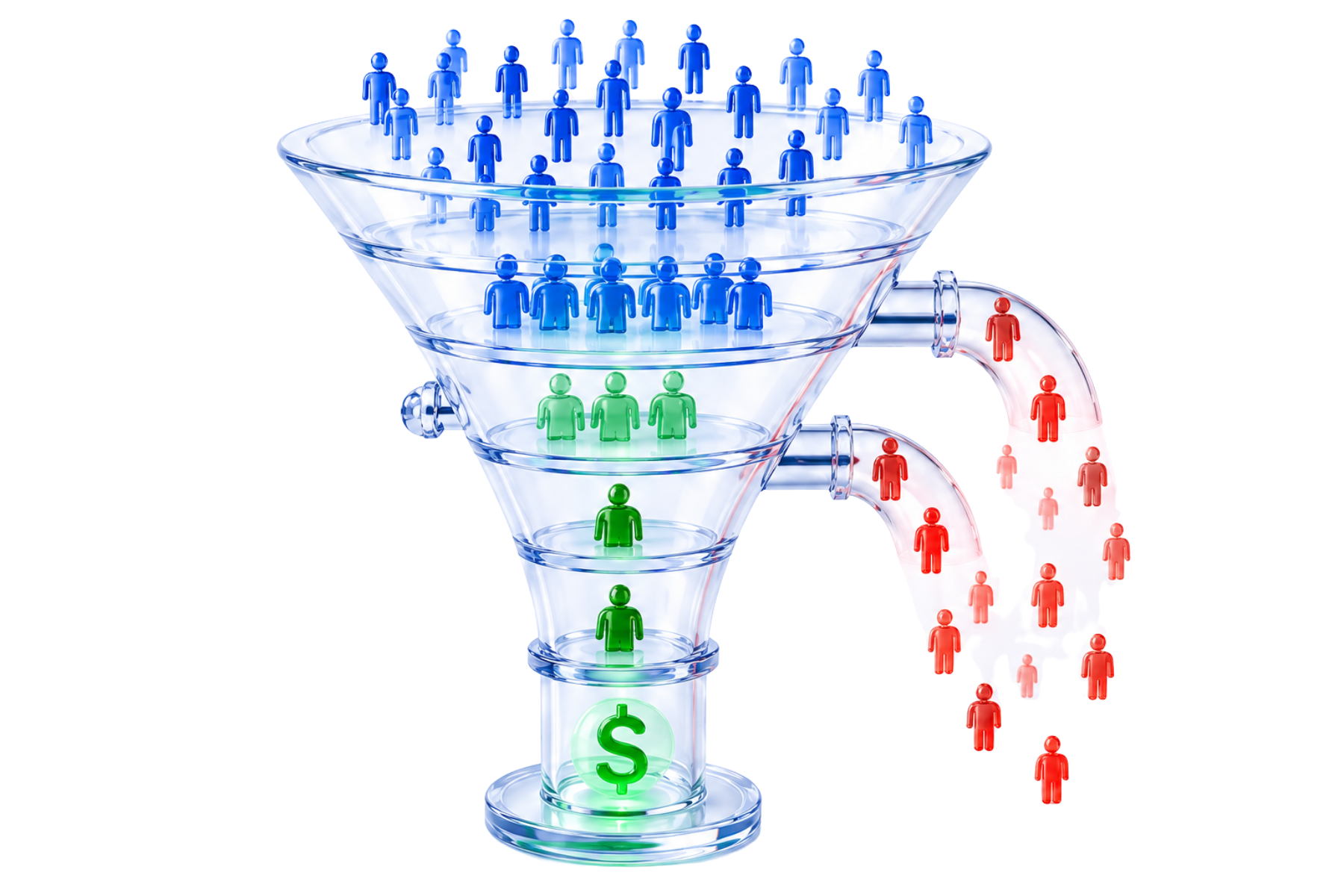
The fastest-growing businesses don't generate the most leads. They generate the right leads — and turn them into predictable revenue.
What You'll Learn In This Guide
What Is A Qualified Lead, Really?
Most businesses define a lead as anyone who fills out a form. That definition is the root of the problem. A form fill is just contact information — it tells you nothing about whether that person will ever buy.
A truly qualified lead combines five conditions. The more of these a lead has, the closer it is to becoming revenue.
- "Just researching" with no timeline
- Doesn't match your ideal customer
- Price-shopping or comparing for later
- No authority to approve a purchase
- Has a defined problem and deadline
- Matches your best existing customers
- Budget already approved or expected
- Decision-maker or close influencer
Why Most Lead-Gen Campaigns Fail
When campaigns produce leads that never buy, it's rarely a budget problem. It's a misalignment problem. Three mismatches cause the vast majority of wasted spend.
- Broad, research-stage terms
- "Free" and "how to" traffic
- Buyer-intent, solution terms
- Targeting everyone, broadly
- No ideal-customer profile
- Built from best-fit customers
- Generic homepage for all ads
- No message match or proof
- Dedicated, intent-matched pages
Where Qualified Leads Come From
No single channel wins on its own. Each has a different speed, cost, and trust profile. The strongest lead engines combine them deliberately.

Pros
- Fast, immediate traffic
- Captures high buyer intent
- Fully measurable and scalable
Cons
- Stops when budget stops
- Costs rise with competition

Pros
- Compounding, durable traffic
- Builds authority and trust
- Lower cost per lead over time
Cons
- Takes months to mature
- Requires consistent content

Pros
- Extremely high trust
- Pre-qualified, high-intent users
- Early-mover advantage
Cons
- Harder to track directly
- Requires strong authority
Buyers increasingly ask AI assistants for recommendations before they ever reach Google. When these tools name your business, the lead arrives pre-qualified and trusting. Earning that visibility is called Generative Engine Optimization.
How To Measure Lead Quality
You can't improve what you don't measure. Lead volume is easy to count — and almost meaningless on its own. These six metrics tell you whether your leads are actually turning into revenue.
7 Proven Ways To Improve Lead Quality
Better leads aren't luck. They're the result of a system that attracts the right people and filters out the rest. Here's the playbook, in order of impact.
Target intent-based keywords
Bid and rank on terms buyers use when they're ready to act — not generic research phrases that attract browsers.
Build dedicated landing pages
Match every campaign to a focused page that mirrors the promise of the ad and removes every distraction.
Add qualifying questions to forms
Capture budget, role, timeline, and need so unqualified leads self-select out before they reach your team.
Fix page speed and friction
Slow pages and clunky forms quietly kill your best leads first. Speed protects the buyers most worth keeping.
Add trust signals everywhere
Reviews, case studies, guarantees, and recognizable logos turn skeptical visitors into confident inquiries.
Automate scoring and routing in your CRM
Score and route leads automatically so sales spends time only on the opportunities most likely to close.
Attribute revenue, not just leads
Track which channels and campaigns produce paying customers — then reinvest in what actually drives revenue.
The Qualified-Lead Flywheel
Qualified lead generation isn't a funnel that ends at a sale — it's a flywheel. Each happy customer feeds the next cycle, lowering acquisition cost and compounding growth over time.
Final Thoughts
Stop measuring success by how many leads you collect. Start measuring it by how many become customers. The shift from volume to quality is the single highest-leverage change most businesses can make.
The companies that win are rarely the loudest. They are usually the most relevant.
You don't need more leads. You need better ones — and a system that consistently finds them.
Frequently Asked Questions
The questions businesses ask most about generating, qualifying, and converting better leads.
What is a qualified lead?
A qualified lead is a potential customer who is actually likely to buy — not just someone who filled out a form. A truly qualified lead combines five things: intent (a real problem to solve), fit (they match who you serve), budget (they can afford the solution), authority (they can make or influence the decision), and timing (they're ready to act now). A lead missing these is just contact information.
How do I generate more qualified leads?
You generate more qualified leads by improving targeting and qualification, not just volume. Target intent-based keywords, send traffic to dedicated landing pages, add qualifying questions to your forms, build trust signals, and route leads through CRM automation so sales focuses on the best opportunities. The goal is to attract buyers, not browsers.
What is the difference between MQL and SQL?
An MQL (Marketing Qualified Lead) is someone who has shown enough interest — through content, forms, or engagement — to be worth nurturing. An SQL (Sales Qualified Lead) has been vetted further and shows real buying intent, fit, and timing, so they're ready for a sales conversation. MQLs measure marketing engagement; SQLs measure sales readiness.
Are Google Ads better than SEO for lead generation?
Neither is universally better — they solve different problems. Google Ads deliver fast, high-intent traffic but stop the moment you stop paying. SEO compounds over time and builds lasting trust, but it takes months and consistent content. The strongest lead engines combine both: ads for immediate demand and SEO for durable, lower-cost growth, increasingly paired with AI search visibility.
How do I qualify leads automatically?
You qualify leads automatically with qualification forms and CRM automation. Add questions that capture budget, role, timeline, and need, then use lead scoring and routing rules in your CRM to rank and assign leads. High-scoring leads go straight to sales, while lower-scoring ones enter nurture sequences — so your team spends time only on opportunities likely to close.
What metrics measure lead quality?
The metrics that measure lead quality include Cost Per Lead (CPL), MQL-to-SQL conversion rate, SQL-to-opportunity rate, cost per opportunity, revenue per lead, and customer acquisition cost (CAC). Together these reveal not just how many leads you get, but how many become real revenue — which is the only number that matters.
Why do I get leads that never buy?
You get leads that never buy because of misalignment, not bad luck. The wrong keywords attract researchers instead of buyers, the wrong audience targeting reaches people who don't fit, and generic landing pages fail to qualify intent. When your message, channel, and offer aren't aligned to real buyers, you collect contacts that look busy but never convert.
How can AI search generate leads?
AI search generates leads when tools like ChatGPT, Gemini, Perplexity, and Claude recommend your business in their answers. Because users trust these recommendations and arrive with high intent, the traffic is highly qualified. You earn this visibility through clear, authoritative content, structured data, and strong topical authority — a practice known as Generative Engine Optimization.
Ready To Generate Leads That Actually Buy?
Let's build a growth system that attracts the right people, filters out the rest, and turns qualified traffic into predictable revenue.
Get A Strategy Call